Embark added Denuvo Anti-Cheat to Arc Raiders on May 19, 2026, and cheaters were already uploading footage of themselves bypassing it within a day of the rollout going live.
That’s not a great start for any anti-cheat system, and it set off a wave of frustration across the Arc Raiders community.
Months later, the picture looks different. Denuvo Anti-Cheat is now fully deployed to every player, and Embark says the results have been promising.
Here’s what Denuvo Anti-Cheat actually does, what day-one cheating looked like, how cheat developers claim to be getting around it, and where things stand now that the dust has settled.
Table of Contents
- What Is Denuvo Anti-Cheat in Arc Raiders?
- Denuvo Anti-Cheat vs. Denuvo DRM: The Distinction That Confuses Everyone
- The Rollout Timeline: From Test Pool to Full Deployment
- What Day-One Cheating Actually Looked Like
- How Cheat Developers Claim to Be Bypassing It
- The Full Anti-Cheat Stack (And How Bans Work)
- Where Things Stand Now
- Key Takeaways
- FAQ
What Is Denuvo Anti-Cheat in Arc Raiders?
Denuvo Anti-Cheat scans for unauthorized background programs, things like memory injectors and third-party overlays that give cheaters an unfair edge.
To do that job, it requires kernel-level access to your system, also called ring 0. That’s the innermost layer of your operating system, where the core processes run with essentially unrestricted access to your hardware.
That level of access sounds alarming, and it’s a big part of why Denuvo’s name draws a reaction whenever it shows up in patch notes.
But kernel-level detection is standard for most modern anti-cheat software, not unique to Denuvo. Easy Anti-Cheat, which Arc Raiders was already running before Denuvo arrived, operates the same way.
The reasoning is straightforward: most commercial cheat software also runs at that level, so an anti-cheat system without kernel access has limited visibility into the tools doing the most damage.
Denuvo Anti-Cheat vs. Denuvo DRM: The Distinction That Confuses Everyone
Denuvo Anti-Cheat and Denuvo DRM are separate products, and mixing them up is one of the most common points of confusion in any discussion about this rollout.
Denuvo DRM is an anti-piracy tool. It verifies a game’s license every time you launch it, checking that your copy isn’t pirated. It’s the product responsible for Denuvo’s reputation around stutters and load-time issues in some games.
Denuvo Anti-Cheat is a different product built specifically to detect cheat software during multiplayer sessions. Embark has stated directly that Arc Raiders uses only the anti-cheat product, not the DRM.
That distinction matters because a lot of the instinctive backlash toward “Denuvo” as a brand is really backlash toward the DRM product, not the anti-cheat one.
The Rollout Timeline: From Test Pool to Full Deployment
Denuvo Anti-Cheat’s path into Arc Raiders followed the same pattern Embark used in The Finals, where the studio said the rollout went well before bringing the tool to Arc Raiders.
- May 7, 2026 - Embark published its “Ensuring Fair Play” post, laying out its anti-cheat philosophy: kernel-level detection from Easy Anti-Cheat combined with machine-learning models built with Anybrain, trained on player telemetry.
- May 19, 2026 - Denuvo Anti-Cheat began rolling out with patch 1.29.0, starting with a limited player pool so Embark could monitor its impact before expanding further.
- June 2026 - The rollout expanded in stages, with Embark confirming in its 1.33.0 patch notes that it was continuing to widen Denuvo’s coverage to more players.
- Early July 2026 - Embark confirmed the rollout was complete. Denuvo Anti-Cheat is now enforced for all Arc Raiders players.
Embark was consistent throughout the rollout about one thing: this is anti-cheat only, no DRM, with an explicit stated priority on minimizing performance impact.
What Day-One Cheating Actually Looked Like
Content creator commentary on Denuvo’s launch day paints a clear picture of how rough the first 24 hours were.
It’s worth walking through what was actually observed rather than just the headline that cheating continued.
ESP, Wallhacks, and Loot Fishing
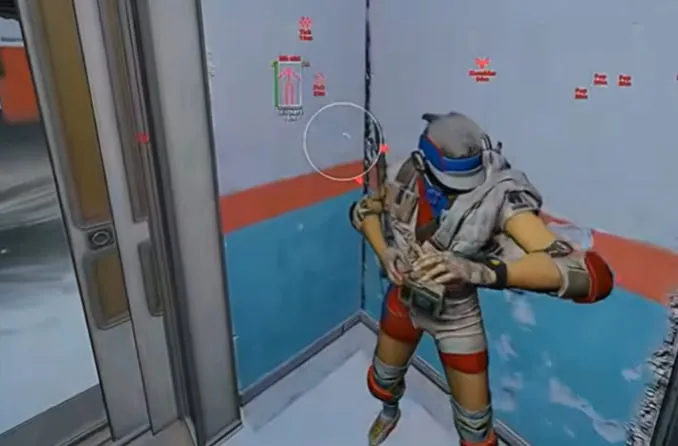
Within a day of Denuvo going live, cheaters were already uploading footage of themselves using it.
According to the creator who documented this, the cheats on display included an overlay showing enemy health and shield status, along with wallhack-style vision through walls that also revealed what equipment other players had on them.
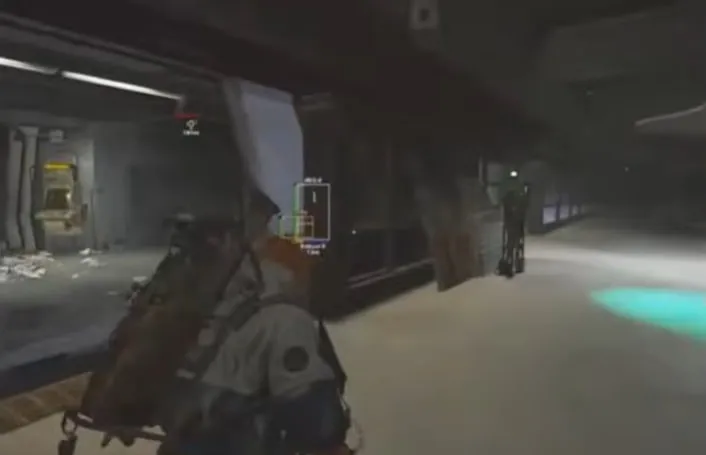
That equipment visibility turned into a targeting pattern. If a cheater could see a player was carrying a valuable item, they could beeline straight for that player and take it.
Making this worse, the creator noted that many of these accounts were freshly made, low-level Steam profiles, meaning they hadn’t yet been placed into higher-aggression matchmaking pools.
Instead, they were showing up in friendlier lobbies aimed at less aggressive players and using that mismatch to hunt easier targets.
Community Reaction Was Immediate
The r/ArcRaiders community reacted within hours of the Denuvo rollout going live, and the tone was frustration mixed with dark humor.

One frequently cited account described running fill trios on the first night of the update, winning an early fight, and then being wiped by a smoke-spamming cheater who killed the whole squad through cover they couldn’t see through.
Other commenters described watching a creator who plays with cheats openly and uploads regularly without any apparent bans.
How Cheat Developers Claim to Be Bypassing It
Community discussion following the rollout offered a few explanations for how cheat developers were getting around Denuvo so quickly.
It’s worth being upfront that most of this comes from commenter speculation and cheat-seller claims rather than confirmation from Embark or independent security researchers.
The most detailed explanation circulating held that cheat developers wrote custom low-level drivers designed to intercept Denuvo’s scanning process and feed it a false all-clear signal while cheats continued running underneath.
This type of attack, a malicious driver interfering with a kernel-level security tool, has precedent elsewhere in gaming. Security researchers have previously documented ransomware abusing a kernel-mode anti-cheat driver in another major online game to bypass antivirus protection, which shows the general attack surface described is technically plausible.
That said, no one has independently confirmed this specific mechanism working against Arc Raiders’ implementation of Denuvo.
Other methods mentioned in community discussion were more mundane: running cheat software inside virtual machines to shield it from detection, and routing connections through VPNs, including servers based in China, to access NA lobbies while obscuring the account’s true origin.
One commenter also pointed to the slow, two-month rollout window itself as a factor, arguing it gave cheat developers time to prepare countermeasures before Denuvo ever reached the full player base.
The Full Anti-Cheat Stack (And How Bans Work)
Denuvo isn’t operating alone. Arc Raiders’ current anti-cheat setup layers four systems together:
| System | Role |
|---|---|
| Easy Anti-Cheat | Kernel-level base layer, in place since before Denuvo |
| Anybrain | Machine-learning behavioral detection, flags suspicious patterns rather than fixed signatures |
| Denuvo Anti-Cheat | Newest layer, added in patch 1.29.0 |
| Loot compensation | Automatically returns loot to players killed by a cheater who is later confirmed and actioned, whether or not you filed a report |
Bans follow a three-strike structure: a 30-day suspension for a first offense, a 60-day suspension for a second, and a permanent ban for a third.
Some players consider the first-strike penalty too soft, pointing to stricter extraction shooters that ban repeat and severe offenders outright.
That pressure has already changed enforcement in practice. Following community backlash over stream snipers repeatedly targeting high-profile creators, Embark began issuing direct permanent bans to some of its most notorious repeat cheaters outside the standard three-strike progression, rather than making them wait through the full 30-day and 60-day stages first.
Embark has continued to test and adjust the system since the initial rollout, including changes to how legitimate accessibility hardware is distinguished from cheat input devices during ML analysis.
Where Things Stand Now
Here’s the update that changes the framing on this whole topic: Denuvo Anti-Cheat is no longer in its rocky launch window.
As of Embark’s July 7, 2026 update, the rollout is complete for all players, and Embark’s own words were that the results so far have been promising, with continued refinements to detection including hardware and software signals plus ML-driven input telemetry analysis.
That doesn’t mean cheating is solved. Community discussion in the weeks since full rollout still describes pockets of wallhack and ESP use, and there are unverified community claims of cheat subscriptions still circulating for a monthly fee, though Embark hasn’t confirmed pricing or scale for that.
No anti-cheat system, Denuvo included, has ever meant zero cheaters. What changed between May and July is the trend line: Embark went from a rough, defeated-within-a-day launch to a completed rollout the studio itself is calling a positive result, alongside continued anti-duplication enforcement that’s helped stabilize the in-game economy.
If you’re deciding whether to jump back into Arc Raiders after hearing about the cheating problem, the honest read is that the situation in late July looks meaningfully better than it did in late May, even if it isn’t perfect.
Key Takeaways
- Denuvo Anti-Cheat is a kernel-level tool that scans for cheat software; it’s a separate product from Denuvo DRM, which Embark isn’t using.
- The rollout started May 19, 2026 with a limited player pool and was completed for all players by early July 2026.
- Day-one cheating included ESP, wallhacks, and low-level throwaway accounts targeting friendlier lobbies.
- Bypass methods discussed by the community include VMs, VPN routing, and a widely repeated but unconfirmed claim about custom drivers intercepting Denuvo’s scans.
- Denuvo works alongside Easy Anti-Cheat and Anybrain’s ML detection, plus a system that returns loot stolen by confirmed cheaters.
- Bans follow a three-strike system: 30 days, 60 days, then permanent.
- Embark’s most recent statement (July 2026) describes results as promising, though cheating hasn’t been fully eliminated.
FAQ
What is Denuvo Anti-Cheat in Arc Raiders?
Denuvo Anti-Cheat is a kernel-level security tool Embark added to Arc Raiders to detect unauthorized programs like memory injectors and third-party overlays. It runs at ring 0, the deepest access level of your operating system, which is where most commercial cheats operate. It is a separate product from Denuvo DRM, which Embark has confirmed it is not using.
Is Denuvo Anti-Cheat the same as Denuvo DRM?
No. Denuvo DRM is an anti-piracy tool that checks whether a game copy is legitimate every time it launches, and it has a reputation for hurting performance. Denuvo Anti-Cheat is a separate product built to detect cheating software. Embark has stated directly that Arc Raiders uses only the anti-cheat product, not the DRM.
When did Denuvo Anti-Cheat come to Arc Raiders?
Embark began rolling out Denuvo Anti-Cheat on May 19, 2026 with patch 1.29.0, starting with a limited player pool. The rollout expanded gradually and was completed for all players by early July 2026, following the same approach Embark used for The Finals.
Does Denuvo Anti-Cheat require kernel-level access?
Yes. Denuvo Anti-Cheat runs at ring 0, the core of your operating system, giving it broad access to monitor system processes for cheat software. This is standard for most modern anti-cheat systems, including Easy Anti-Cheat, which Arc Raiders also runs, but it remains a point of concern for some players regarding privacy and system access.
Is Arc Raiders still full of cheaters after Denuvo?
Cheating has not disappeared, but Embark’s July 2026 update described the results since full rollout as promising, with continued improvements to detection. Community reports still describe pockets of ESP and wallhack use, so the honest answer is that cheating has been reduced, not eliminated.
How are cheaters bypassing Denuvo Anti-Cheat?
Community discussion following the May 2026 rollout pointed to a few methods: running cheats through virtual machines, routing traffic through VPNs to obscure origin, and, according to one widely repeated but unverified community explanation, custom drivers designed to interfere with Denuvo’s detection process. Embark has not confirmed the specific technical details of any bypass method.
What is Arc Raiders’ ban system for cheaters?
Arc Raiders uses a three-strike system: a 30-day suspension for a first offense, a 60-day suspension for a second, and a permanent ban for a third. Some players consider this too lenient for a first offense, especially compared to stricter systems in other extraction shooters. Embark has also issued direct permanent bans to some notorious repeat offenders outside this standard progression.
Does Arc Raiders return loot stolen by cheaters?
Yes. Embark automatically returns loot to your inventory if you were killed by a player later confirmed to be cheating, whether or not you filed a report yourself.
What other anti-cheat tools does Arc Raiders use besides Denuvo?
Denuvo Anti-Cheat is one layer in a larger stack that also includes Easy Anti-Cheat as a kernel-level base layer and Anybrain, a machine-learning system that flags suspicious behavior through pattern analysis rather than fixed cheat signatures.
Why does cheating hurt the Arc Raiders economy?
Cheating and item duplication are connected problems. Players using duplication exploits have flooded parts of the in-game economy with duped high-value gear, some of which ends up sold through third-party marketplaces, which undercuts legitimate trading and progression.