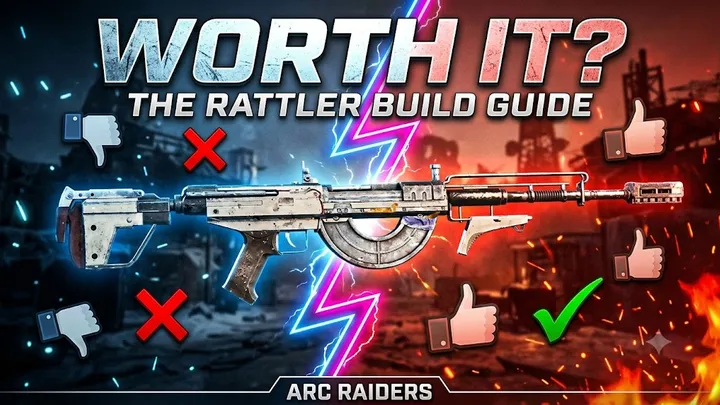
The Rattler doesn’t look like much on paper. It’s a Common-rarity assault rifle, cheap to craft, and everyone knows its one glaring flaw: reload it wrong and you’re standing still while the fight moves on without you.
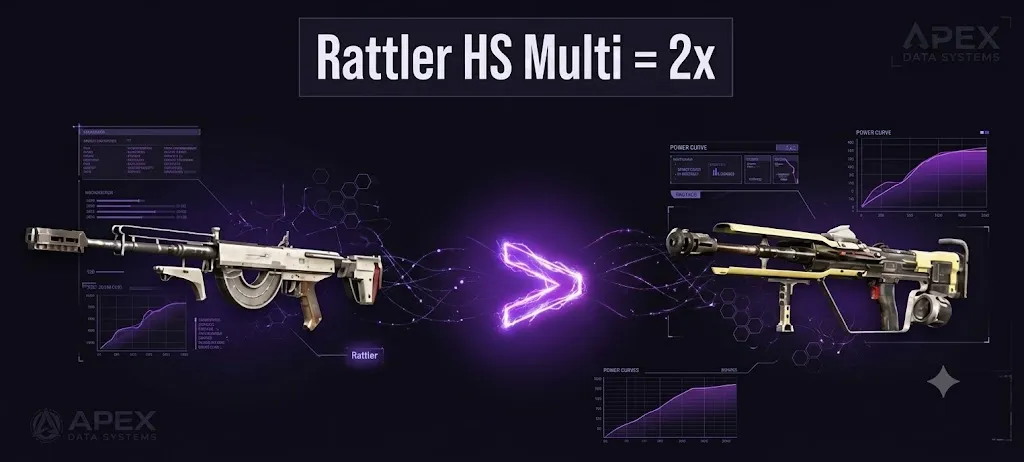
But it also carries a 2.0x headshot multiplier, better than the Epic-tier Tempest’s 1.5x. That raises an obvious question: with a Kinetic Converter bolted on for extra fire rate, can the Rattler actually hang with better guns?
One creator set out to answer that across three different builds and three different raids. The results weren’t what you’d expect from a “worst gun in the game” reputation.
Rattler Base Stats: What You’re Working With
The Rattler is a fully-automatic Common assault rifle that runs on Medium Ammo. Its magazine size scales as you upgrade it at a Gunsmith bench: 12 rounds at Rattler I, 16 at Rattler II, 20 at Rattler III, and the full 24 rounds at Rattler IV.
The tradeoff for that low rarity and cheap crafting cost is the reload. Instead of swapping in a full magazine at once, the Rattler loads two bullets at a time, which stretches the reload out far longer than most other rifles in the game.
Where the Rattler earns its keep is the headshot multiplier. At 2.0x, it hits noticeably harder on headshots than most Assault Rifles in its tier, which is exactly what makes the Kinetic Converter build worth testing in the first place.
| Stat | Rattler I | Rattler II | Rattler III | Rattler IV |
|---|---|---|---|---|
| Magazine Size | 12 | 16 | 20 | 24 |
| Durability (shots) | 517 | 575 | 649 | 737 |
Rattler vs. Tempest: The Actual Numbers
The Tempest is one of the most popular Epic-tier assault rifles in Arc Raiders, and it’s the natural benchmark for the Rattler. Both use Medium Ammo and both fire fully automatic, but they win in different ways.
The Tempest carries a 25-round magazine and a slightly faster fire rate, which gives it one of the quickest body-shot times to kill in the game. Its tradeoff is a 1.5x headshot multiplier, among the lowest of any weapon outside shotguns.
The Rattler flips that equation. Fewer rounds per magazine, a slower overall fire rate, but a 2.0x headshot multiplier that rewards precision over spray.
If you can consistently land headshots, the Rattler closes the damage gap with the Tempest fast. In short engagements, it can outright win that trade.
The Kinetic Converter: What It Actually Does
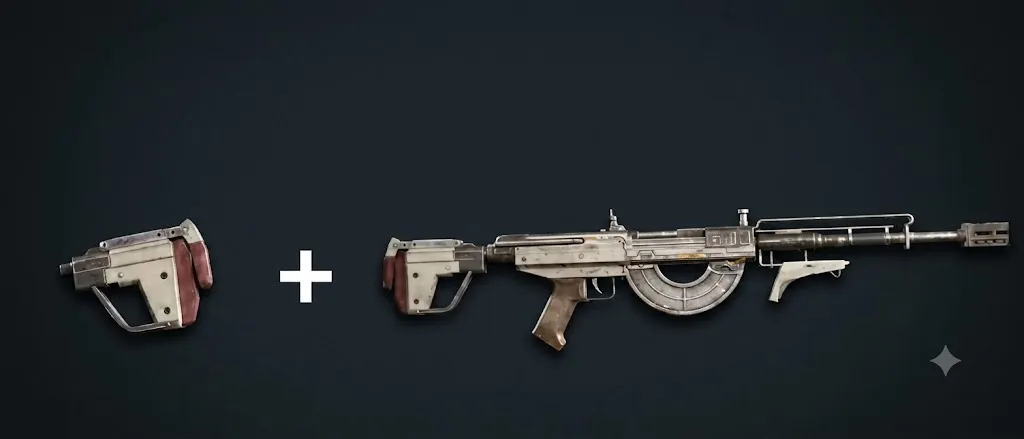
The Kinetic Converter is a Legendary weapon mod that fits the stock slot on a range of weapons, including the Rattler, Ferro, Kettle, Stitcher, Bobcat, and several others. Its core effect is a moderate increase to fire rate, at the cost of added horizontal and vertical recoil.
It’s a rare drop with no guaranteed crafting path, which is part of why it doesn’t see much testing on lower-rarity weapons like the Rattler. Most guides pair it with SMGs like the Bobcat instead.
Stacking it on a headshot-focused Assault Rifle like the Rattler is a less common combination. That’s the whole premise behind this build test.
Build 1: Fast-Fire Kinetic Rattler on Stella Montis
The first build kept things simple: Rattler, Kinetic Converter, and nothing else complicating the loadout. The creator dropped into Stella Montis, a map known for dense ARC activity and frequent player collisions, to see how the extra fire rate handled real fights.
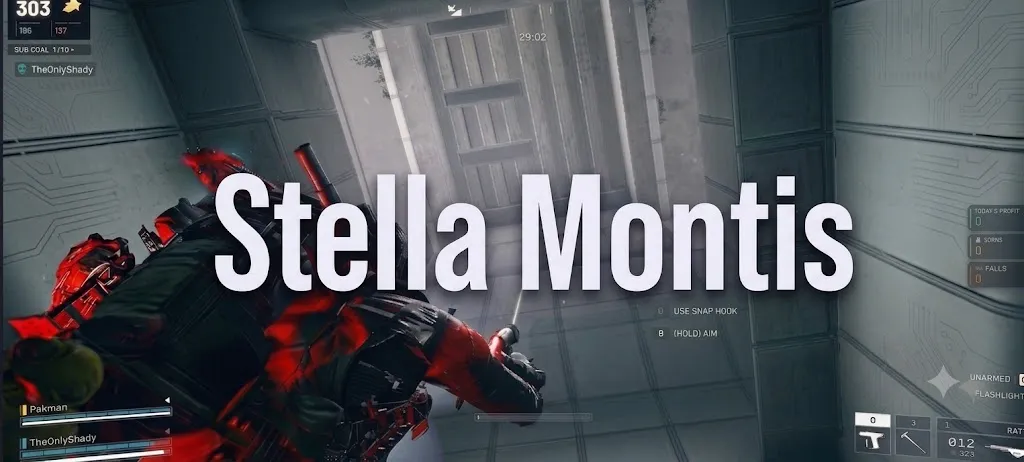
The run turned into an unusual one almost immediately. A random player rushed the squad, dropped his weapons, and asked to spectate instead of fight, revealing partway through that his teammate was his own father.
What followed was a string of chaotic multi-team engagements around the map’s rat-infested interior. The squad traded kills across at least three different enemy teams in quick succession.
Through it all, the Kinetic Converter’s fire-rate boost made itself felt in short trades. Fights that would normally take a full mag to close out ended faster, and the squad cleared several two-person teams back to back without needing to reload mid-fight.
The build’s first real test came in a longer engagement against a team holding a strong angle from a rooftop. The extra fire rate helped close the gap before the magazine ran dry.
Build 2: Recoil-Control Kinetic Rattler in Full Trios
For the second test, the creator switched to a recoil-focused setup on a different map, running in full trios against squads carrying fully-kitted Epic weapons.
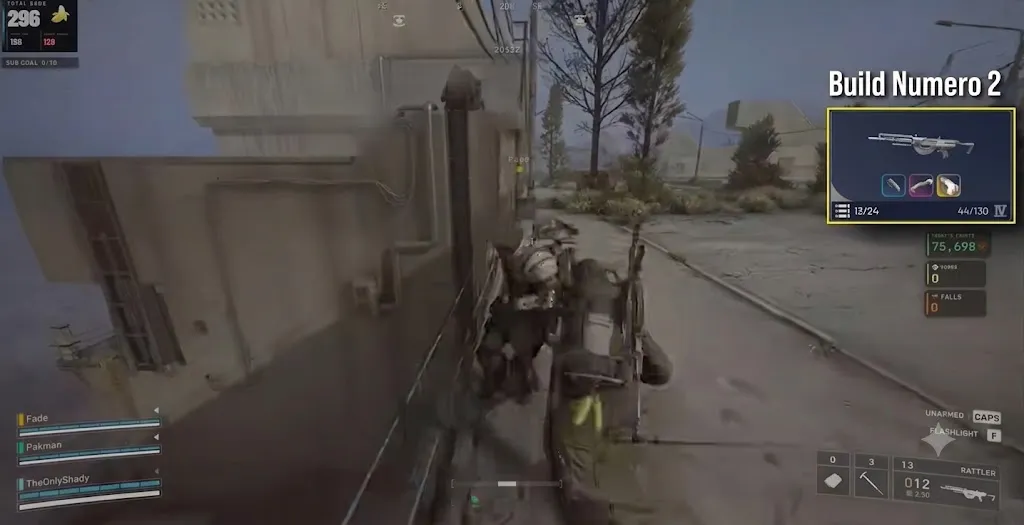
This is the environment where the Rattler’s reputation usually falls apart. Missing the opening exchange against better-geared opponents leaves little room for error.
The squad cleared a building held by an enemy team, then pushed to the roof to scan for additional targets after the noise from the fight drew attention.
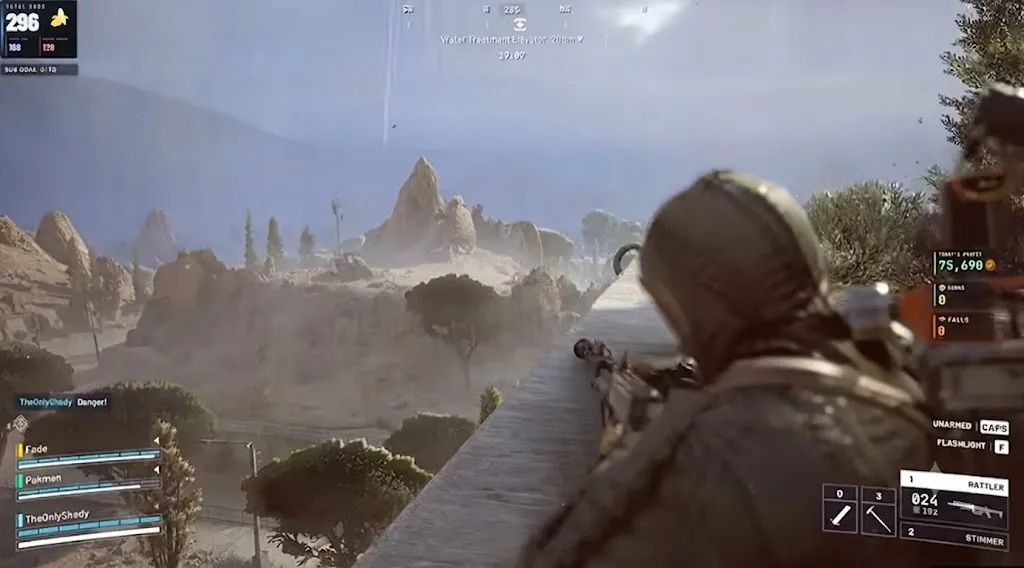
From there, the fight escalated into a defended position against enemies with strong headglitches. It then widened into a three-team engagement as outside squads rotated toward the gunfire.
This is where the Rattler’s reload problem showed up hardest. In the middle of a multi-team fight, the creator was forced to reload with no ammo left and no clean angle to retreat to, a moment that directly illustrates the tradeoff the whole build is built around.
The squad still came out ahead in that particular exchange, wiping the opposing teams in the area. But the reload window was the one point where the build’s core weakness was fully exposed rather than theoretical.
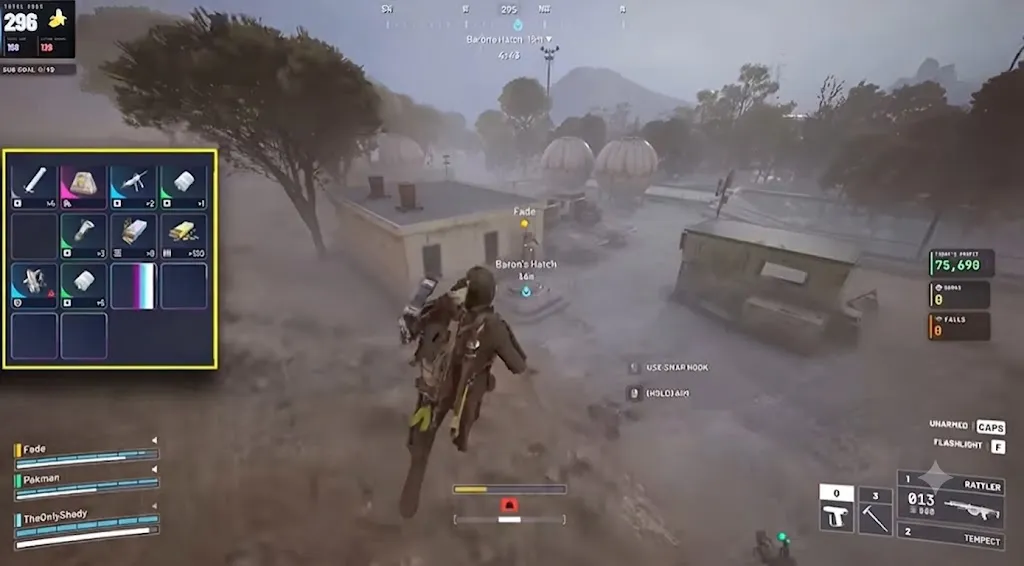
Build 3: Long-Range Kinetic Rattler with Extended Barrel
The third and final build added an Extended Barrel to push the Rattler’s usable range further, tested in Buried City, a map with more open sightlines between buildings than the previous two.
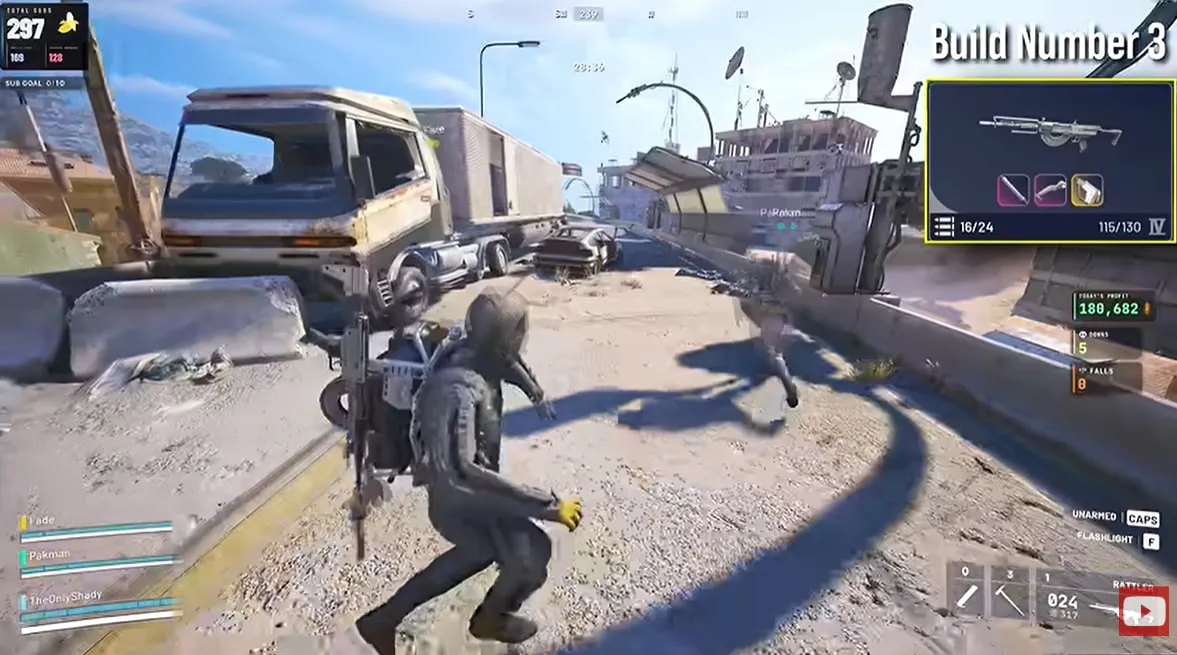
The squad pushed into a building to clear a team taking fire from a second building nearby, at one point stopping to revive a squadmate mid-fight during what was, in-game, his character’s birthday.
Not long after, a second squad began breaching the barricades the team had set up to hold their position. A third team joined the fight from a different angle soon after that.
Caught between two directions of attack with no clean exit, the squad was eventually wiped. It’s the one build of the three that ended in a loss.
It’s also the most honest data point in the whole test: even with extended range, the Rattler isn’t built to out-duel a coordinated multi-team push once the ammo economy turns against you.
Is the Rattler Worth Running? The Verdict
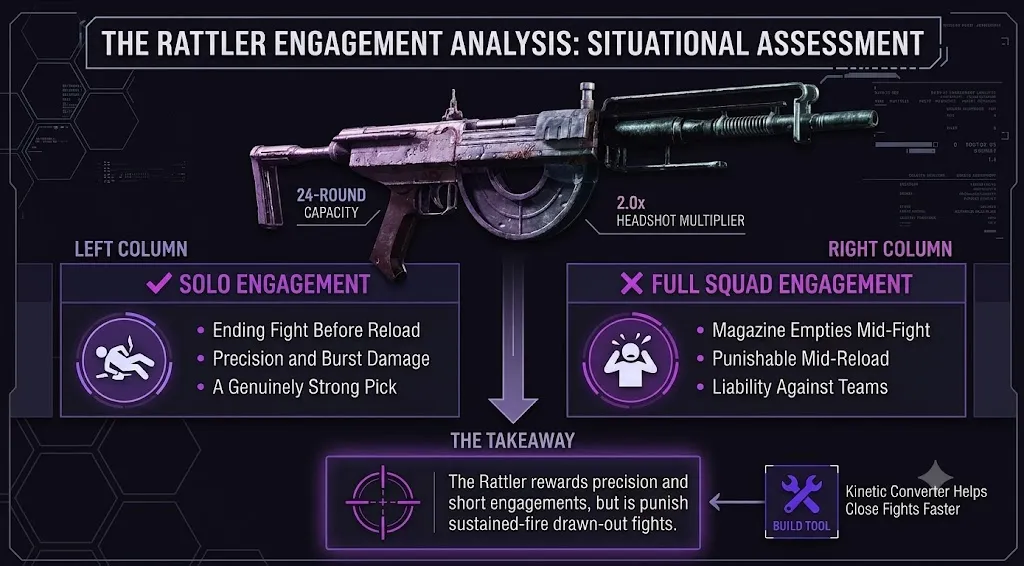
After three builds and three different maps, the pattern is consistent. In solo fights, the Rattler’s 24-round magazine and 2.0x headshot multiplier can end an engagement before the reload ever becomes relevant. Against a single opponent, it’s a genuinely strong pick.
Against full squads, the calculation changes. The moment the magazine empties mid-fight, the two-bullets-at-a-time reload turns into a liability that a well-equipped enemy team can punish immediately. The Kinetic Converter helps close fights faster before that point is reached, but it doesn’t solve the reload itself.
The takeaway from the testing isn’t that the Rattler is bad. It’s that the Rattler rewards precision and short engagements, and punishes anyone who tries to play it like a sustained-fire weapon in a drawn-out trio fight.
Alternative Approach: The Double-Rattler Strategy
If the reload is the dealbreaker, one alternative worth trying is running two Rattlers instead of one, each fitted with a Light Stock to speed up weapon swaps. The idea is to empty the first Rattler, swap instantly to the second instead of reloading, and only reload once you’ve found cover.
It effectively doubles your available ammo before you’re forced into a reload window, at the cost of giving up a secondary weapon slot for something other than a Rattler backup. It’s a different philosophy from the Kinetic Converter builds tested here, but worth knowing about if the reload keeps costing you fights.
Key Takeaways
- The Rattler’s 2.0x headshot multiplier beats the Tempest’s 1.5x, making precision play genuinely rewarding.
- Magazine size scales with upgrades, topping out at 24 rounds on a fully upgraded Rattler IV.
- The reload (two bullets at a time) is the Rattler’s core weakness and the main reason it struggles in trio fights.
- The Kinetic Converter boosts fire rate at the cost of recoil, and pairing it with the Rattler is an uncommon but viable combination.
- Across three tested builds, the Rattler performed well in solo and short engagements but folded once caught reloading against multiple squads.
- The double-Rattler strategy with Light Stock is a separate approach worth trying if the reload consistently costs you fights.
FAQ
Is the Rattler good in Arc Raiders?
The Rattler is a solid, cheap Common assault rifle with a strong 2.0x headshot multiplier, but its reload (two bullets at a time) is one of the slowest in the game. It performs well in solo fights where its magazine can end an engagement outright, but it becomes a liability in trio lobbies once the mag runs dry.
How many bullets does the Rattler hold?
The Rattler’s magazine size scales with upgrades: 12 rounds at Rattler I, 16 at Rattler II, 20 at Rattler III, and 24 at Rattler IV. Reaching the full 24-round magazine requires fully upgrading the weapon at a Gunsmith bench.
Does the Rattler have a better headshot multiplier than the Tempest?
Yes. The Rattler has a 2.0x headshot multiplier compared to the Tempest’s 1.5x, which is one of the lowest in the game. The Tempest makes up for this with a larger 25-round magazine and a faster body-shot time to kill.
What does the Kinetic Converter do in Arc Raiders?
The Kinetic Converter is a Legendary weapon mod that moderately increases fire rate at the cost of extra horizontal and vertical recoil. It’s compatible with a wide range of weapons, including the Rattler, Bobcat, Stitcher, and Vulcano.
Is the Rattler good for solo PvP?
Yes, more so than in trios. In solo fights, the Rattler’s headshot damage can end an engagement before the reload becomes an issue. The weakness shows up in extended team fights where you’re forced to reload under pressure.
What’s the biggest weakness of the Rattler?
The reload. Once the magazine empties, the Rattler reloads two bullets at a time instead of all at once, which takes noticeably longer than most other assault rifles. Getting caught reloading mid-fight against a full squad is usually fatal.
Can you use the Kinetic Converter on the Rattler?
Yes. The Rattler is one of the weapons compatible with the Kinetic Converter’s stock slot, along with the Ferro, Kettle, Stitcher, Bobcat, and several others.
Is the Tempest better than the Rattler overall?
It depends on the fight. The Tempest has a faster body-shot time to kill and a bigger magazine, making it more forgiving in sustained fights. The Rattler hits harder on headshots and is a Common-rarity weapon, making it far easier and cheaper to keep stocked than the Epic-tier Tempest.
What’s an alternative to fixing the Rattler’s reload problem?
Some players run two Rattlers with a Light Stock attachment instead of one. The idea is to empty the first Rattler and swap to the second when it runs dry rather than reloading mid-fight, effectively doubling your ammo pool before you need to stop and reload.
Where does the Rattler perform best?
Close to mid-range fights, especially in tighter map layouts like Buried City where cover is nearby and reload windows are easier to find. It struggles more in open engagements where you can’t break line of sight after emptying the mag.